 Floretti
Washing tips
Why aren't laundry strips dissolving? 7 practical solutions
You take out the laundry and find a piece of strip left in the wash. Annoying, but almost always solvable. A laundry strip should dissolve completely during the program, so if something remains, it points to the conditions in the machine. Usually it's not a major defect, but one of these seven things: insufficient water contact, an overloaded drum, a too-short program, or a strip that has become damp. Go through them from top to bottom.
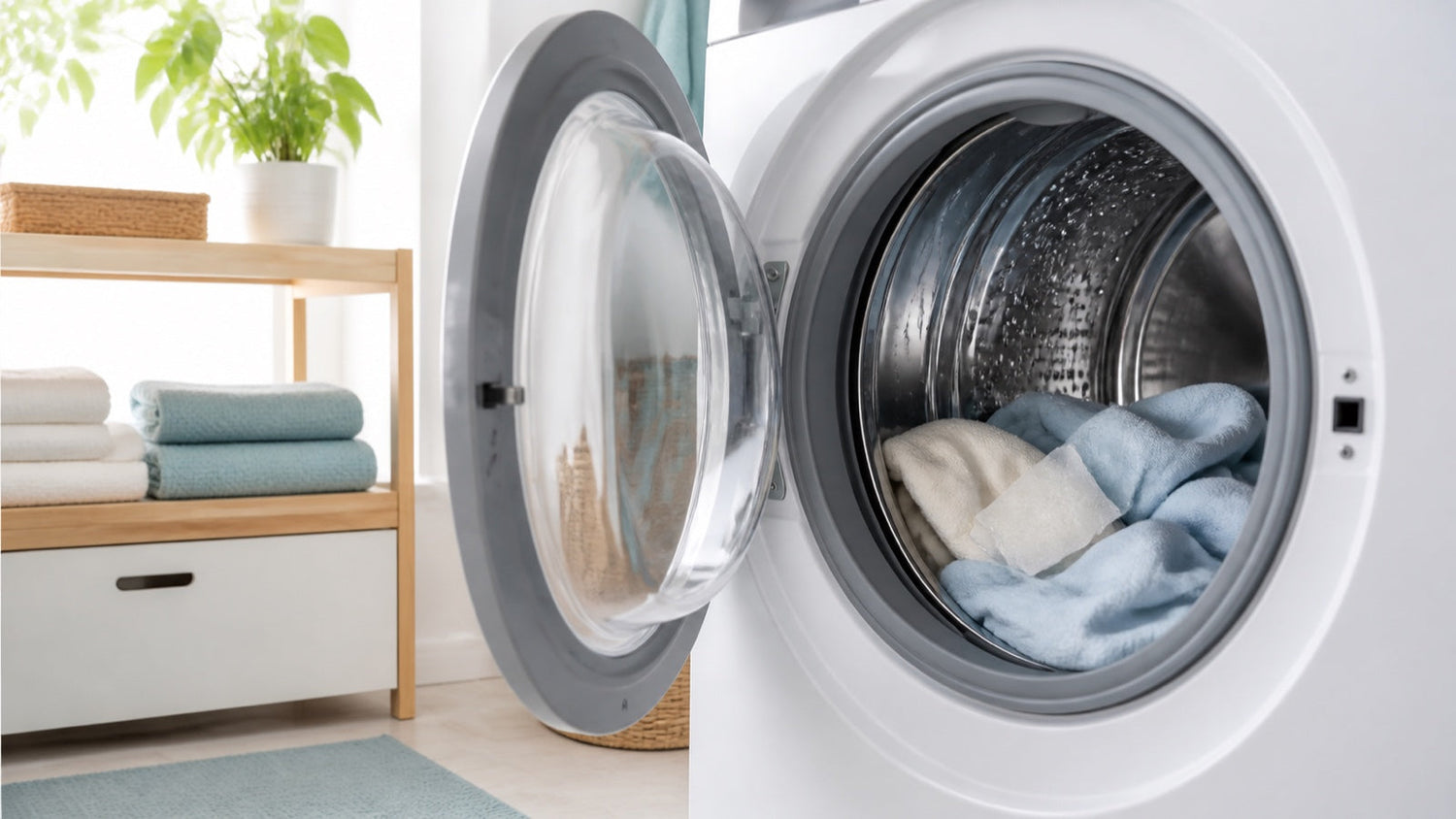
1. Place the strip directly in the drum
Laundry strips are not intended for the dispenser drawer. Place the strip with or on top of the laundry, so that water and movement can reach it immediately. Also check if your machine does not use a compartment or program that only adds water later.
2. Do not overfill the drum
A drum packed full limits movement and water distribution. Towels and bedding quickly form a compact mass that little can penetrate. Leave space according to your machine's guidelines and preferably wash large items separately if they can barely move.
3. Do not choose an extremely short program
A very short program often uses less water and less movement. If you've previously seen a strip residue, try a normal program that suits the textile. The ideal setting varies per machine; your washing machine's manual is leading.
4. Check if the strip has been stored dry
Moisture makes laundry strips sticky and can cause two to stick together. Store them sealed and dry, not next to a sink, shower, or wet laundry. If a strip is already soft or discolored before washing, it's best not to use it.
5. Use the correct dosage
A too-large lump, or multiple strips stacked on top of each other, will not fall apart as easily. Use the dosage that suits your load and follow the instructions on the packaging. For a small wash, half a strip may be sufficient, if indicated for your variant.
6. Check the water supply
If the machine receives little water, any detergent is absorbed less effectively: strips, powder, and liquid all. Check if the tap is open, if the supply hose is not kinked, and if the filter is clean according to the machine manual. In case of an error message, a technician or supplier should investigate.
7. Test with a normal cycle
If the problem persists, run a normal cycle with a small amount of laundry and one appropriate dosage. Note the program, temperature, and load. This way you can specifically see whether it's due to the strip, the machine, or the chosen setting, instead of changing everything at once.
When to contact us?
Contact us if the strip does not dissolve after repeated correct use, if multiple packages show the same issue, or if the package arrived damp or damaged. Note the batch or lot number and send a photo; this will help us investigate faster.
Frequently asked questions
Is a small residue immediately a problem?
An occasional residue can arise from the strip's placement, the load, or the program. Review the seven points above before overhauling your entire washing routine.
Can I put the strip in the detergent drawer?
No, place it directly in the drum. There it gets the best contact with water and the laundry.
Should I add extra strips if a piece remains?
Not automatically. First find the cause and adhere to the normal dosing guideline. Extra dosing can actually increase residues.
Would you like to calmly reread the basics? Check out how to use laundry strips correctly or the complete Floretti washing guide.


